
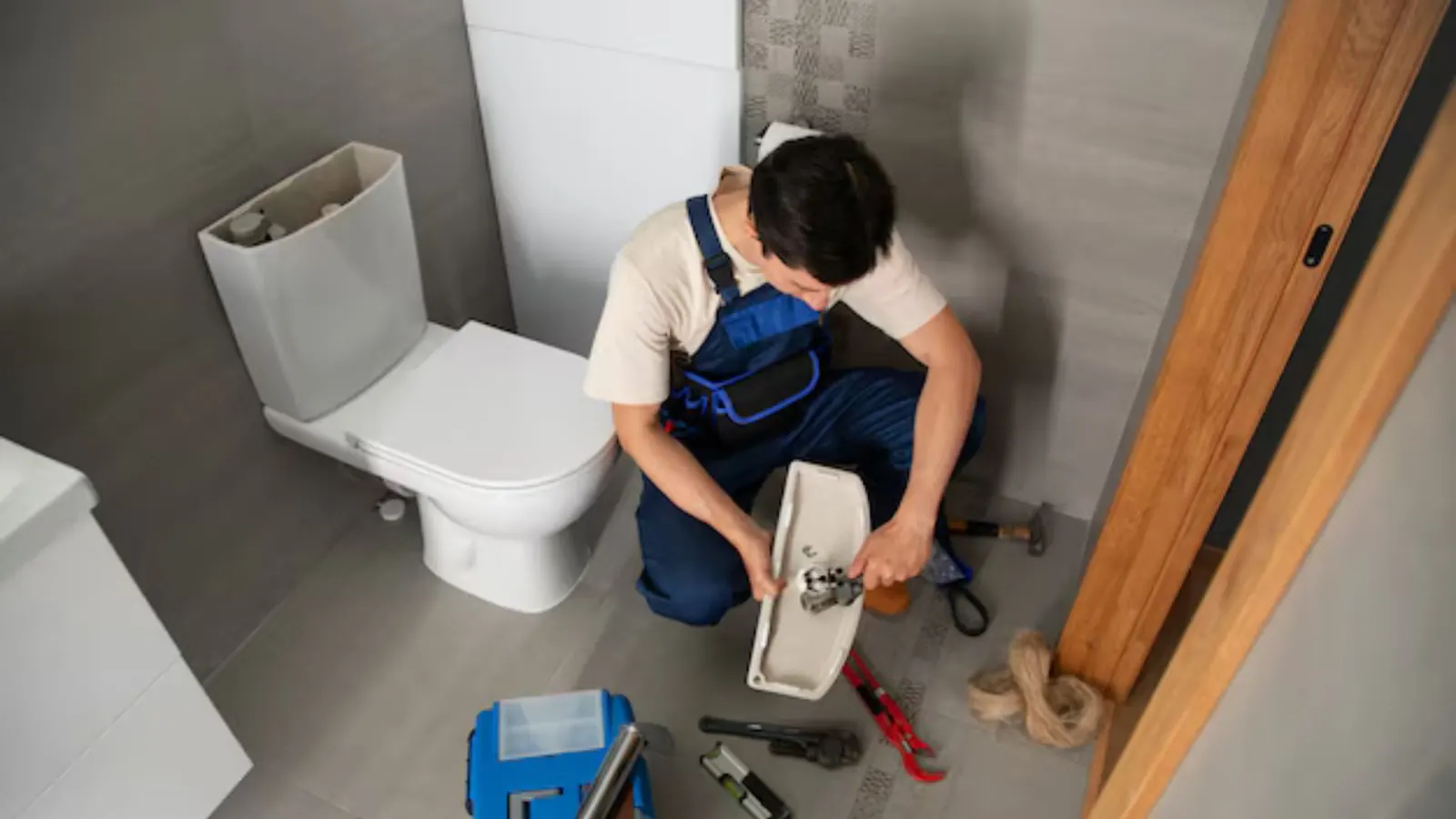
Toilet problems range from a minor annoyance, like a toilet that runs after every flush, to a real water damage risk, like a failed wax ring seal leaking at the base with every use. We handle the full range: running toilets, weak or incomplete flushes, wobbling or rocking bowls, and full toilet replacement when a unit is beyond repair or you're upgrading fixtures.
A running toilet alone can waste hundreds of gallons a day depending on the fill valve or flapper issue, which shows up as a real cost on your water bill even without any visible leak.
Common Toilet Failure Points in Older Everett Homes
Toilets in homes with older, narrower drain lines sometimes show more frequent clogging issues simply due to the pipe diameter, separate from the toilet itself. A wax ring seal at the base typically lasts 20-30 years, which means original toilets in pre-1990s homes are often due for that seal to be checked even if the toilet hasn't shown obvious symptoms yet.
Fill valves and flappers are the most common source of running toilets regardless of home age, and these are wear items that degrade with normal mineral content in the water supply over years of use.
Toilet Calls From Everett's Older and Newer Homes
Fixture calls come from every neighborhood, but the cause changes with the house. Older homes in Glacier View and Port Gardner often have original toilets with failed wax rings and worn flush valves, while rentals and multifamily buildings around Westmont and Evergreen tend to need a quick repair that gets a tenant back to normal the same day.
Overflowing or Leaking Toilet: When to Call Right Away
An overflowing toilet is an emergency when the water will not stop rising, when it contains sewage from a backed-up line, or when it is leaking into a room below. Turn the stop valve behind the toilet clockwise to stop the refill, or lift the tank lid and hold the flapper down.
If the toilet backs up along with a tub or floor drain, the blockage is probably in the main line rather than the toilet. Call our 24/7 line and we will clear it, then repair or replace the toilet if the fixture is the problem.
Call the 24/7 line right away if
- Water keeps rising after you close the supply valve
- Sewage appears in the bowl, tub or a floor drain
- Water leaks from the base and soaks the floor or the ceiling below
- The supply line or shutoff valve is spraying
- The tank or bowl cracked and is leaking
Signs Your Toilet Needs Attention
- The toilet runs intermittently or continuously after flushing.
- Water or moisture visible at the base of the toilet on the floor.
- A wobbling or rocking bowl when you sit down or stand up.
- Weak flush that requires multiple attempts to clear the bowl.
- Frequent clogging even with normal, non-excessive use.
Diagnosing a Toilet Problem
A running toilet is diagnosed by checking the fill valve, flapper, and flush valve seal individually, since any of the three can cause the same symptom with a different fix. Water or moisture at the base points to either a failed wax ring or a cracked base, which require different repairs.
For frequent clogging, we'll check whether the issue is the toilet's own trapway design or a downstream drain line problem, since treating the wrong one wastes money without solving the actual cause.
Component Repair vs. Full Replacement
A running toilet from a worn fill valve or flapper is a low-cost, straightforward repair. A wobbling bowl usually means the wax ring seal has failed and needs replacement, which we address before it causes floor damage.
For a toilet with a cracked base, persistent clogging tied to an outdated low-flow design, or simply an outdated style you want to update, full replacement with a modern, efficient toilet is often the better long-term choice. If you're updating the toilet as part of a larger bathroom refresh, see our shower & bathtub installation page for the rest of the room.
What Affects Toilet Repair & Installation Cost
Cost Factors
- Repair type: a fill valve or flapper replacement costs far less than a wax ring reseal.
- Fixture quality: a standard toilet costs less than a high-efficiency or comfort-height model.
- Flooring condition: floor damage from a long-term wax ring leak may need separate repair.
- Access: a toilet in a tight bathroom layout can add labor time.
- Removal and disposal: full replacement includes removing and disposing of the old fixture.
A running toilet or minor leak is a maintenance issue, not typically an insurance matter. Water damage from a sudden wax ring failure may be covered depending on your policy.
Want your real number? Call (425) 845-0257.
What to Check Before You Call
- Check if the toilet runs continuously or only intermittently after flushing.
- Feel around the base of the toilet for any moisture or softness in the flooring.
- Note whether the bowl wobbles when you sit or stand, which suggests a wax ring issue.
- If the toilet won't stop running, you can usually shut off the supply valve behind it as a temporary fix.
- Note how old the toilet is, since units over 20-30 years old are due for a wax ring check regardless of symptoms.
Toilet Repair Questions
How much water does a running toilet actually waste?
Depending on the specific fill valve or flapper issue, a running toilet can waste hundreds of gallons a day, which shows up as a real increase on your water bill.
Is a wobbling toilet always a wax ring problem?
Usually, yes, though it can also mean the toilet's mounting bolts have loosened. We check both during diagnosis.
Should I repair or replace an older toilet?
If it's a single component failure on an otherwise sound fixture, repair makes sense. For a cracked base or persistent issues, replacement is usually the better value.
Do you install high-efficiency toilets?
Yes, including standard, high-efficiency, and comfort-height models.
Do you serve areas outside Everett?
Yes, including Snohomish, Mukilteo, Lake Stevens, Mill Creek, Edmonds, Marysville, and Lynnwood.
Can you fix an overflowing toilet at night?
Yes. Close the supply valve behind the toilet to stop the refill, then call our 24/7 line. If other drains are backing up too, tell us, since that points to a main line clog.