
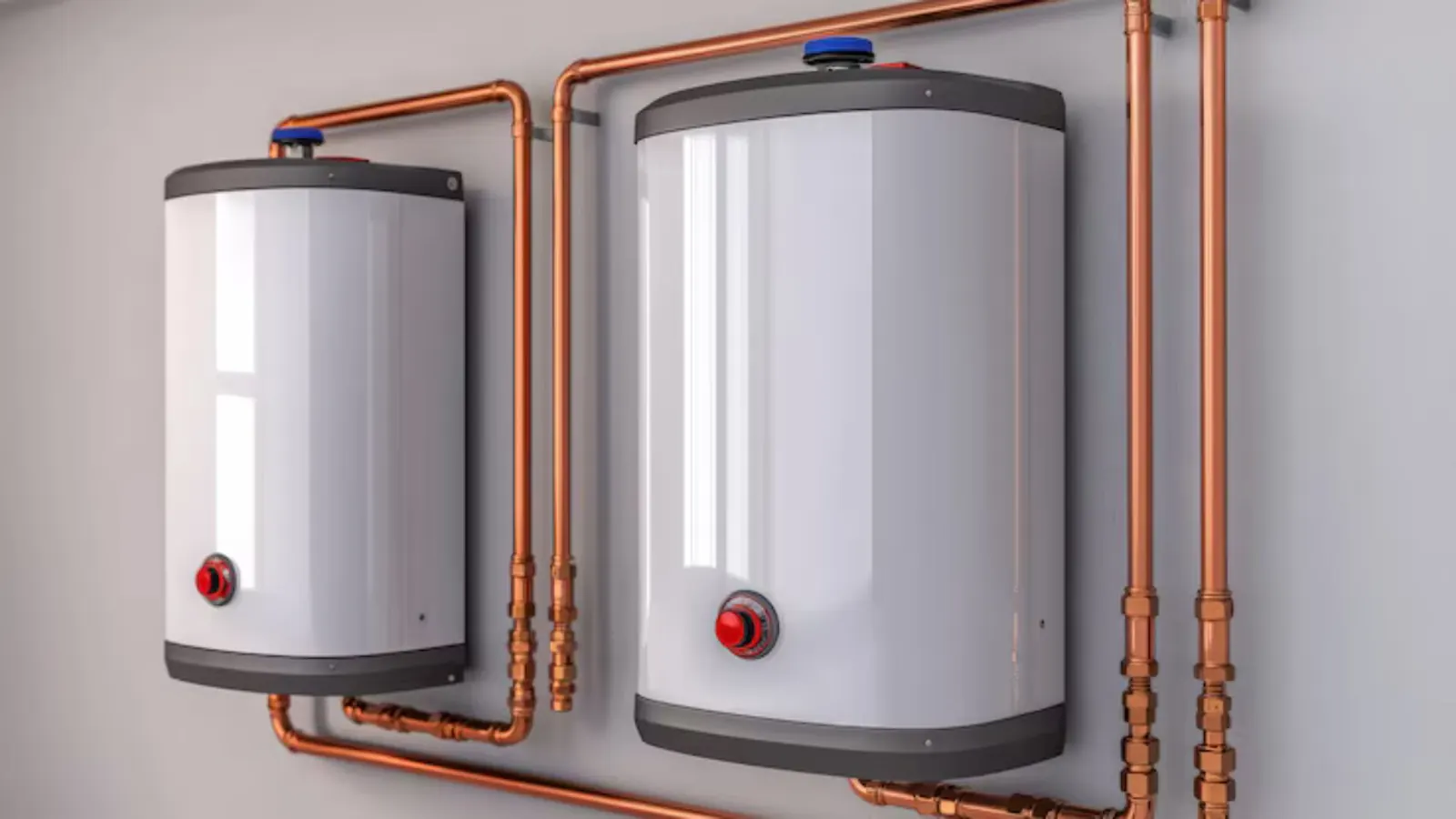
Every water heater replacement decision eventually comes down to the same question: tank or tankless? Both are legitimate options, and the right choice depends more on your household's actual usage pattern than on which system is objectively better.
How Each System Actually Works
A tank system heats and stores a set volume of water, typically 40-50 gallons for a residential household, keeping it hot and ready. A tankless system heats water on demand as it flows through, with no storage at all, which eliminates standby heat loss but means output is limited by the unit's flow rate rather than a fixed reservoir.
When a Tank Makes More Sense
A tank system has a lower upfront cost and simpler installation, which matters for a straightforward replacement where the existing venting and space already fit a tank. It also handles simultaneous high-demand use, like two showers running with a dishwasher going, more predictably than a tankless system sized for average rather than peak demand.
When Tankless Makes More Sense
Tankless systems make the most sense for households wanting on-demand hot water without running out, plus the standby energy savings of not keeping 40-50 gallons hot around the clock. The upfront cost is higher, and not every home's existing gas or electrical service can support a tankless unit without upgrades, which is worth confirming against the manufacturer's minimum gas line and venting standards before assuming it's a simple swap.
Why This Question Comes Up in Mill Creek
Mill Creek was incorporated on September 30, 1983 and was originally developed as a golf course community, so it is a younger city than Everett. Tankless conversions are a common question for homeowners there. A homeowner replacing a working but aging tank is in a different position than one reacting to a failed tank, because there is time to compare options.
See our tankless water heater service page for descaling and maintenance specific to tankless systems, and our water heater installation & replacement page for a full comparison of tank options if you decide to stay with a traditional system.
The Question Most Homeowners Actually Need Answered
Rather than asking which system is better in the abstract, the more useful question is: how much hot water does your household actually use at peak times, and does your current gas or electrical service have room to support a tankless unit's higher instantaneous demand? A household of two adults with staggered showers has very different needs than a family of five all getting ready in the same 30-minute window, and that difference matters more to the decision than general opinions about which technology is more modern.
Longevity and Total Cost of Ownership
A well-maintained tankless unit typically lasts 15-20 years, meaningfully longer than a standard tank's 10-12 year lifespan, which changes the total cost comparison once you look past the higher upfront tankless price. Over two tank replacement cycles, a single tankless installation often ends up cost-competitive or better, provided the unit gets its annual descaling service rather than being neglected.
Space and Installation Considerations
A tankless unit mounts on a wall and takes up a fraction of the floor space a 40-50 gallon tank requires, which matters in a smaller utility closet or when converting a closet into usable storage space elsewhere in the home. That said, installation requirements differ meaningfully: tankless units need a dedicated gas line sized for their higher instantaneous demand, or in electric models, a substantial electrical circuit, both of which may require upgrades an existing tank installation never needed.
Venting also differs between the two. A tankless gas unit typically uses a different venting configuration than a standard tank, which means a straightforward swap isn't always as simple as disconnecting one unit and connecting the other. A proper assessment before committing to a conversion catches these requirements before they become a surprise mid-project.
A Middle-Ground Option Worth Knowing About
Hybrid heat pump water heaters are a third option worth mentioning, though less common than either standard tank or tankless systems in this area. They use a heat pump to extract warmth from surrounding air rather than burning gas or using resistance electric heat. Which can offer significant energy savings in the right installation location, though they need adequate surrounding air volume and aren't a fit for every mechanical closet.
If neither standard tank replacement nor tankless conversion feels like a clean fit for your household, it's worth asking about this option during your assessment rather than assuming the choice is strictly binary.
Mill Creek and the Snohomish County PUD Rebate
Snohomish County PUD lists a rebate of up to $1,000 for a qualifying heat pump water heater that replaces an existing heater. The application and receipt are due within 90 days of the invoice, per the PUD page updated June 24, 2026. Eligibility is set by the PUD, so check its page before you buy.
We serve Mill Creek and Lynnwood. See our water heater replacement page for tank options.
Sources: Snohomish County PUD heat pump water heater rebate page (updated June 24, 2026).
Quick Answers
Can I convert to tankless without upgrading my gas line?
Not usually. Tankless units need higher instantaneous gas flow than most existing lines are sized for.
Do tankless systems run out of hot water?
Not in storage terms, but they do have a maximum flow rate, so running multiple fixtures simultaneously can exceed capacity.
Is a tank system being phased out?
No, tank systems remain a fully valid, widely available option and aren't going away.
Is there a rebate for a heat pump water heater in Snohomish County?
Snohomish County PUD lists a rebate of up to $1,000 for a qualifying heat pump water heater that replaces an existing heater. The application and receipt are due within 90 days of the invoice, and the PUD sets eligibility, so confirm on its page first.
The Bottom Line
Neither system is universally better. The right choice depends on your household's actual peak hot water demand and whether your home's existing gas or electrical service can support a tankless unit without costly upgrades. A real cost comparison over the full expected lifespan of each option, not just the sticker price, is what makes the decision clear.
When in doubt, ask for both a tank replacement quote and a tankless conversion quote side by side before deciding, using your household's real morning routine as the test case. That real-world scenario, not a spec sheet number, is what actually predicts whether you'll be happy with the choice a year from now.